Early Barker’s to America

I found this information: 1 May 2026
US Family History Books 
Title: Outline of the Bowlby Family in the Vicinity of Washington, New Jersey: of Newark, Ohio and Vicinity of Leroy and Green Valley Illinois Vicinities.
Author Grizzelle, Eva Crumbaugh

Edward Barker of Branford, Conn was born about 1625 and emigrated to America in 1640 was a very prominent man. He died about 1703, leaving numerous descendants. Wife’s name unknown.

The links between the lines of Robert Barker of Plymouth Colony, his brother John of Duxbury, Mass and English ancestors is clearly shown by the coat-of-arms used by the brothers and their father in England. “Barry of then or sable, over all a bend or ”. [Not sure what this means]

The Principal Visitation of Shropshire, England commenced the pedigree of the Barker with Randulph de Calverhall, tenant in fee of the Manor of Calverhall in 1200, his son was William de Calverhall of Balnominster (1219) and his great grandson  (1278) bore the first Barker arms. This man was Randulph de Calverhall whose son William was forced to flee when his king, Edward II became unpopular.

He appeared in Hallon as William le Barker which soon became plain “Barker”. His son was Roger le Barker, his son was William Barker, his son was William Barker, his son was Henry Barker, his son was William, His son was John, his son was John of Colohurst, his son was George and his sons were John and Robert. They came(it is said) to New England about 1628-1630. They left numerous descendents. John Barker, the direct descendant of Randulph de Calverhall of England(1200) He also shows many descendents.

Richard Barker appeared in Andover, Mass in 1643.  James Barker, his wife Grace and son Barzillai came with the twenty Puritans families who arrived at Salem Massachusetts under the leadership of the Reverend Ezekel Rogers in 1638. Left a numerous family. In 1682 William Penn came to America on the ship “Welcome” and with him came his friend Samuel Barker who belonged to the Society of Friends. His descendents lived in the old homestead near Wilmington, Delaware until 1840. He is buried in the Old Swedes Church in Willington, Delaware.

While there were Barkers in Virginia as early as 1624 the first record found of James Barker is that he was born in England in 1726. That he was Captain of a British Man of War and came to America and was with George Washington at Braddock’s defeat in 1755. He married Mary Smith of Portsmouth, England. One of his descendants of the fourth generation Mary Barker married Jame Burwell. The Barkers of West Virginia came from Delaware and their son “Joseph” settled at “Red Stone”. 
_________________________________________________________________
I asked ChatGPT to cleanup and expand on this story,
Here’s a cleaned-up and expanded version of your text, with clearer structure, corrected grammar, and a bit of historical context added where helpful. I’ve kept the original meaning while smoothing out uncertainties and flow:


Edward Barker and Early Barker Lineages in America

Edward Barker of Branford, Connecticut, was born about 1625 and emigrated to New England around 1640. He became a prominent member of the community and remained there for the rest of his life. He died about 1703, leaving numerous descendants. The name of his wife has not been identified in surviving records.

The connection between the lines of Robert Barker of Plymouth Colony and his brother John Barker of Duxbury, Massachusetts, and their English ancestry is believed to be demonstrated through the coat of arms used by the family both in England and in America. The arms are described as: “Barry of ten or and sable, over all a bend or.”
In heraldic terms, this means a shield divided into ten horizontal stripes alternating gold (or) and black (sable), with a diagonal gold band (bend) running across the entire shield.

According to the Principal Visitation of Shropshire, England, the Barker pedigree is traced back to Randulph de Calverhall, who was tenant in fee of the Manor of Calverhall around the year 1200. His son, William de Calverhall, was recorded at Balnominster in 1219. A later descendant, also named Randulph de Calverhall (circa 1278), is said to have been the first to bear what later became known as the Barker arms.

Tradition holds that during the reign of King Edward II, when political unrest made conditions unfavorable, a descendant named William was forced to flee. He settled in Hallon, where he became known as “William le Barker,” a name that soon evolved into the simpler “Barker.” From this point, the surname became established.

The lineage is then traced through several generations as follows:
William le Barker → Roger le Barker → William Barker → William Barker → Henry Barker → William Barker → John Barker → John Barker → John Barker of Colohurst → George Barker → and finally his sons, John and Robert Barker.

It is said that John and Robert Barker emigrated to New England between approximately 1628 and 1630, where they established families and left many descendants. John Barker, in particular, is noted as a direct descendant of Randulph de Calverhall and is associated with a large and continuing lineage in America.

Other Barker families also appear early in New England records. Richard Barker was documented in Andover, Massachusetts, in 1643. James Barker, along with his wife Grace and their son Barzillai, arrived in Salem, Massachusetts, in 1638 as part of a group of twenty Puritan families led by the Reverend Ezekiel Rogers. This family likewise produced numerous descendants.

In 1682, when William Penn sailed to America on the ship Welcome, he was accompanied by his friend Samuel Barker, a member of the Society of Friends (Quakers). Samuel Barker settled near Wilmington, Delaware, where his descendants remained on the original homestead until about 1840. He is buried at Old Swedes Church in Wilmington.

Although individuals with the Barker surname were present in Virginia as early as 1624, a later figure of note is James Barker, said to have been born in England in 1726. He reportedly served as a captain in the British Navy and came to America, where he was present with George Washington at the time of Braddock’s defeat in 1755 during the French and Indian War. He married Mary Smith of Portsmouth, England.

Among their descendants, Mary Barker of the fourth generation married James Burwell. A branch of this family later moved from Delaware into what is now West Virginia. Their son, Joseph Barker, settled at Redstone, contributing to the spread of the Barker family into the western frontier.


If you want, I can also turn this into a more formal genealogical report (with citations and notes about which parts are historically proven vs. traditional/uncertain), since some of these early medieval links are often debated.
Posted in Barkers | Leave a comment

George Robinson Barker – Obituary

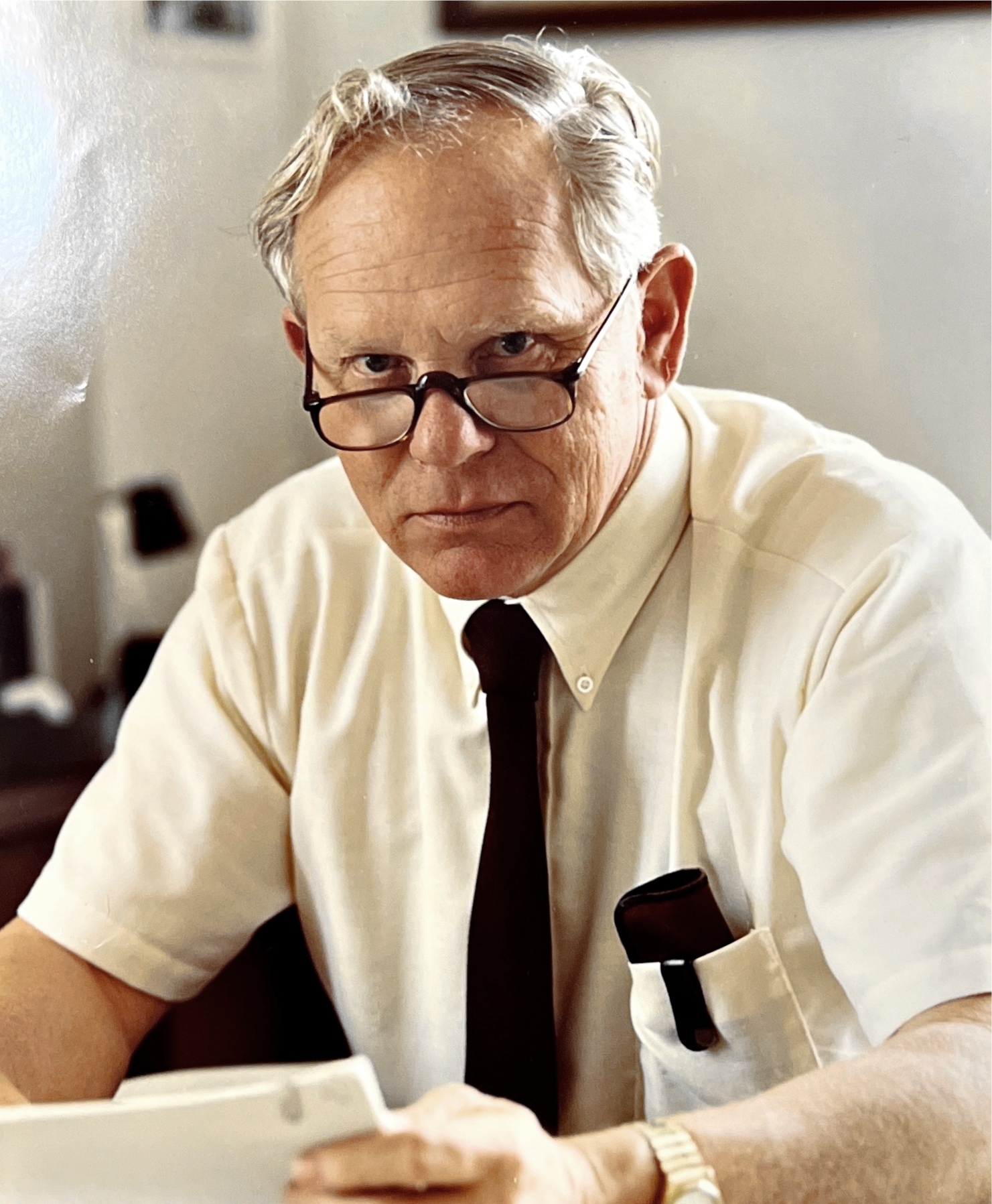
George Robinson Barker, “Bob”, passed away on Thursday, September 28, 2023, he was 94 years old. Born on January 8, 1929 to George Myron Barker and Elizabeth Leeds Barker of Fairfield, CT, where he grew up. He attended the Choate School for Boys, Middlebury College and Yale for his master’s degree in silviculture. He enlisted in the Navy in 1950 and was part of a hurricane hunting team stationed out of Jacksonville Florida. 

After a four year stint in the Navy, Bob went to work for St. Regis Paper Company – first as a forester, then as a leading pioneer into GIS Mapping. Through his work, he spent a lot of time commuting from Jacksonville, FL to the computer center at the University of Georgia in Athens. After a long career at St. Regis Paper Co, Bob took his vast knowledge of satellite imaging and went to work in Reston, VA for SPOT Imaging, a French company, where he spent 5 years helping the company get established. After a brief stay in Reston, Bob and Joyce moved to Athens, GA where he became an adjunct professor at the University of Georgia’s Warnell School of Forestry. He also served for 10 plus years on the Athens Tree Council and several of those years as President. While serving on the Commission he re-initiated the “Champion Tree” program within the county.

Bob married his longtime friend and sweetheart, Joyce Edwards, on April 25, 1953 and together they raised 4 children: Karen May (Barry), Bruce, Diane Brown (Greg) and George (Rachel). Bob leaves behind four children, 16 grandchildren and 15 great grandchildren. Preceded in death by his wife, Joyce and daugher-in-law, Pamela. Bob and Joyce were longtime members of the Arlington Congregationalist Church of Jacksonville, Florida.      

A friend to anyone he met, Bob was always ready to talk and had plenty of funny statements or sayings. He often said his day was complete if he could make someone laugh or smile. He will be missed. 

Posted in Barkers | Leave a comment

Catherine Virginia Toole Hendrix

Obituary:

Catherine (Kitty) Virginia Lane, age 91, died peacefully on Friday 

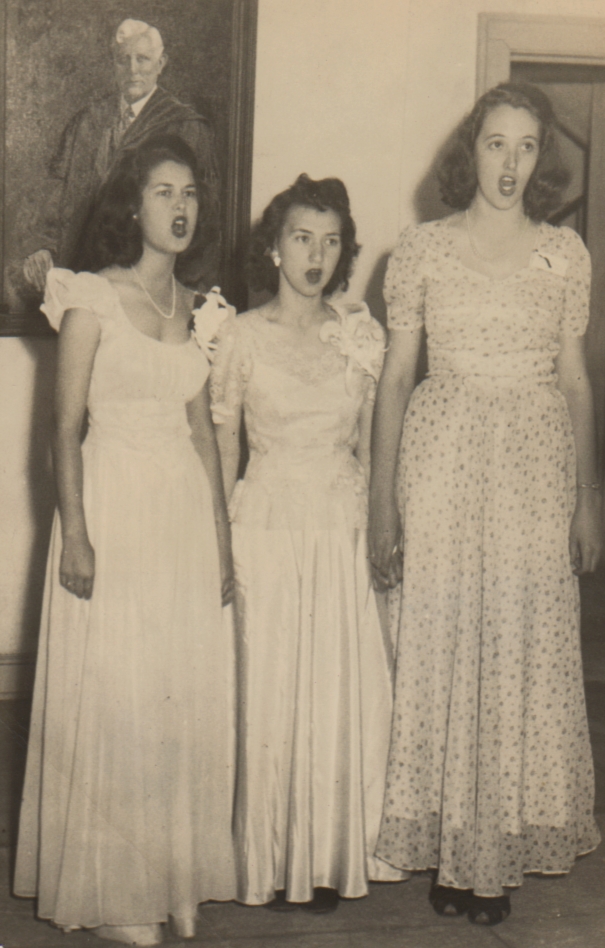
May 3, 2019 in hospice at Piedmont Hospital in Athens, Georgia. She spent her last day surrounded by family, music and recordings of her singing. Kitty had a beautiful voice and sang many solo parts in church choirs. As a teenager she sang ‘Don’t Fence Me In’ live on the radio. Kitty was born on March 11, 1928 in Millen Georgia to Lee La Vance and Lena Mae (Ledbetter) Toole. She was a 1947 graduate of Reinhardt University. She married Lee R. Hendrix on June 8, 1947. Together they raised 4 children; Pamela, Robert, Phyllis and Ellen. In 1970, Kitty, Lee and their son Robert, founded the House of 10,000 Picture Frames in Athens, Georgia.  Kitty also loved to paint, carve wood pieces, and make extremely intricate greeting cards. She had a kind heart,  great sense of humor, loved to travel  and was an adventurer, once at the age of 78 riding her bicycle down Pikes Peak.

 Kitty is survived by her husband of 16 years Captain Gail Lane, her children Pam Barker, Robert Hendrix and Ellen Daniel. Son-in-laws; Don Ransom, John Daniels and Bruce Barker and daughter-in-law Beth Hendrix. Her Grandchildren Briana Ransom, Tony Ransom, Taylor Ransom, Robinson Barker, Margaret(Greta) Barker and Emmy Hendrix. Brother, Thomas Toole, sister-in-laws; Wynette (Hendrix) Hutson and Karen Hendrix. 

She is predeceased by her husband of 54 years, Lee Hendrix and beautiful daughter Phyllis Ransom. Services and a celebration of her life to be announced. 

Catherine Toole – 1945/46
Posted in Hendrix, Toole, Uncategorized | Leave a comment

Madison Cotton Gin

In 1882, the Madison Cotton Gin Company, which owns the Phoenix Mills at Madison, Florida offered Ralph Barker the position of secretary and treasure.

Madison, Florida
Cotton planters settled the town of Madison, Florida in 1838, though there were residents there before that. The county was established in 1827 and by 1850 the county population had grown to more than 5,000 people.
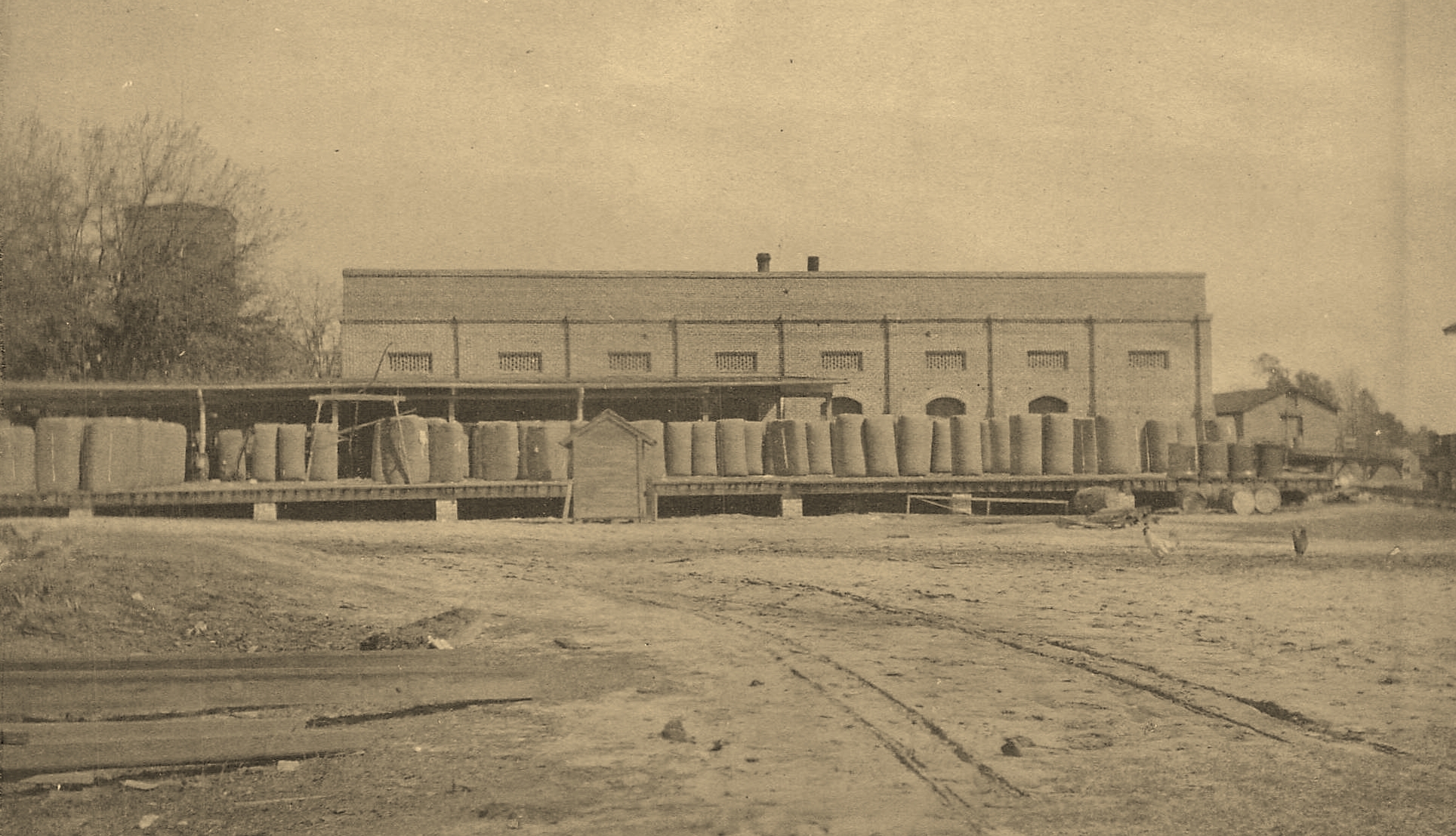
The world’s largest longstaple cotton gin was located in Madison before the boll weevil arrived in 1916, and wiped out the cotton industry. The “cotton years” memories are preserved in a small park near the Amtrak railroad station in the south side of town. In the park is a 16 foot drive wheel for a 500 horse power engine that once pulled 65 gins in what was said to be be the worlds largest cotton processing plant.

Cotton Bales at the Phoenix Cotton Mill Madison Florida

Posted in Barkers, Historical | Leave a comment

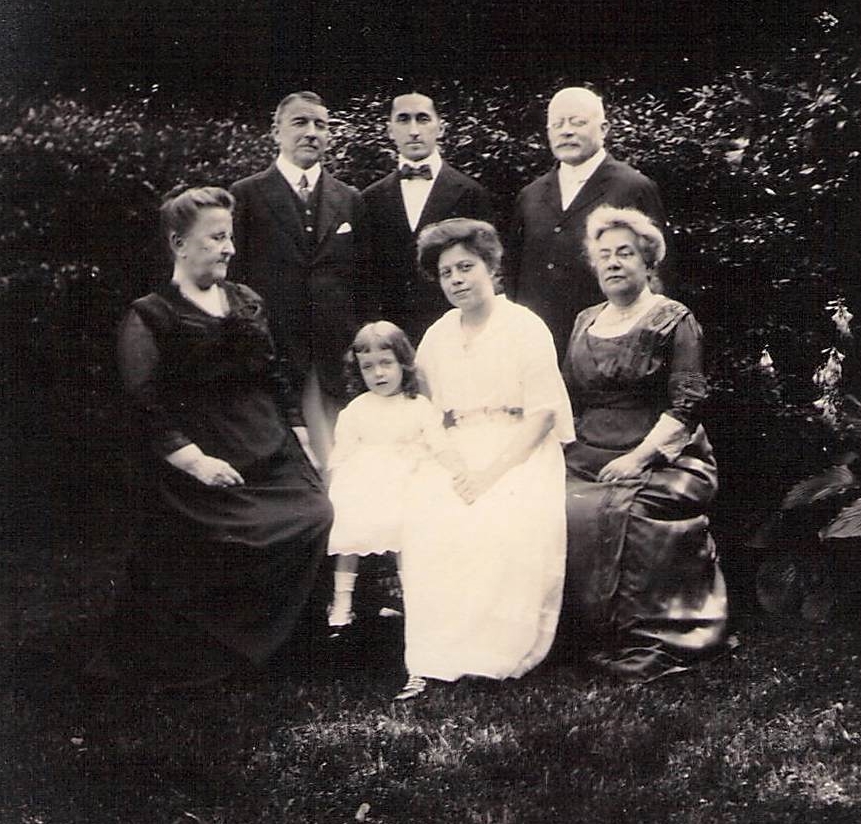
Barker – Edwards Group Photo

Standing back row: George Clarke Edwards (1846-1919), George H. Edwards (1881-1967), Ralph Barker (1857-1928). Seated front row: Ardelia Esther Holmes Edwards (1848-1916), Cornelia E. Edwards (1911-2004), Cornelia Clarke Barker Edwards (1882-1949), Eugenia Frear Robinson Barker (1858-1924)

Cornelia Clarke Barker Edwards was the oldest child of Ralph and Eugenia Barker, my great grandparents – on my father’s side. She married George H. Edwards who was a descendant of Holmes & Edwards Silver Co.

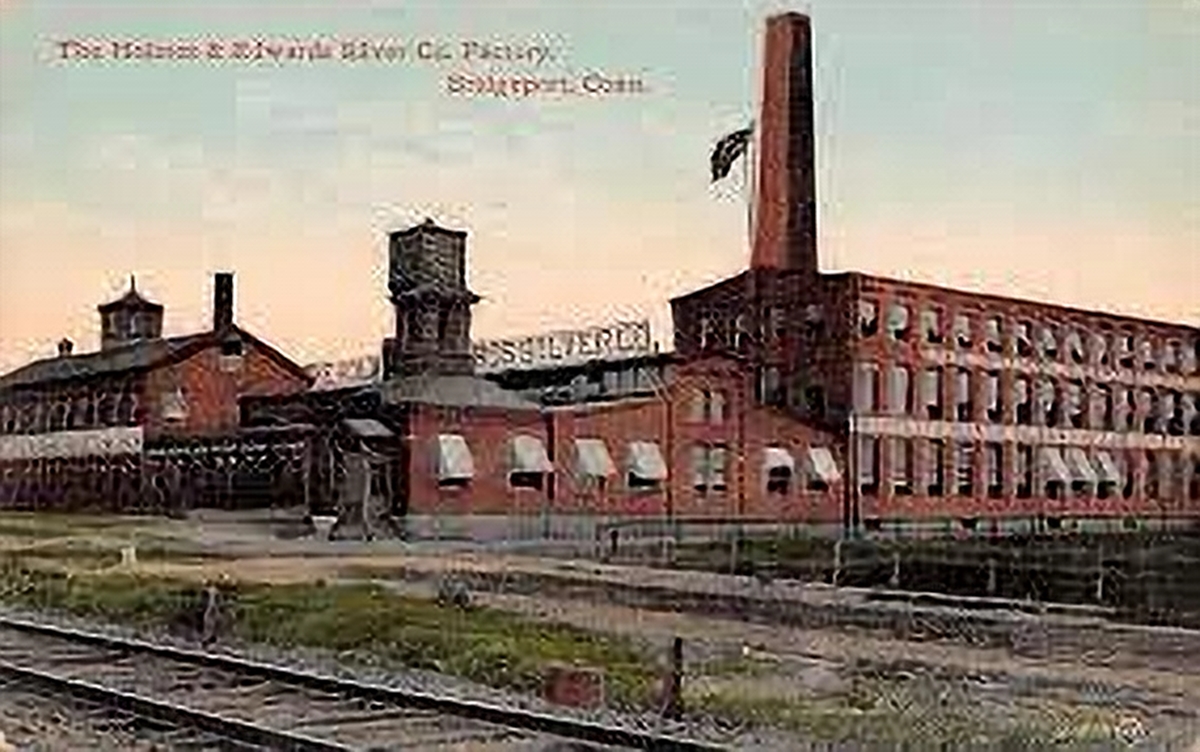
The Holmes & Edwards Silver Co.
The roots for the Holmes & Edwards Silver Co. goes back to the Roger and Brittin Silver Co which was established in January 1880. Edwin Brittin, one of the original founders died suddenly in 1881. C.E.I. Holmes and George Edwards acquired the their company in 1892 and The Holmes & Edwards Silver Co was established in Bridgeport, CT.

Holmes & Edwards Silver Co. factory, Bridgeport, CT

George Holmes Edwards
Source: Google Books Biography Pg. 139
George is with International Silver Co. successor to Holmes & Edwards Silver Co., Bridgeport, CT. also Secretary of the Bridgeport Chain Co. Residence 174 Park Place, Bridgeport CT (Vol.1 page 124) Unmarried.
George Holmes Edwards was born on February 26, 1881 at Binghamton, NY, the son of George Clarke Edwards and of Ardelia Esther (Holmes) Edwards. His father is Vice President of the International Solver Co. and President of the Bridgeport Chain Company.
B.A., 1905

” In 1905 after graduation I spent 6 weeks in travel through the British Isles. January 1, 1906, began business with the International Silver Co., Factory ‘C’ being still associated with this concern, paying particular attention to advertising of Factory ‘C’ (Holmes and Edwards). Summer of 1906 spent 6 weeks vacation in England, visiting Devonshire, Sherwood Forest, Ragland , etc. The summer of 1907 took a flying trip through Europe with roommate, William D. Dean, landing in Bremer Haven and visiting Hartz Mountains, Berlin, Dresden, Cologne, Mainz, Heidelberg, Lucerne and London. In early part of 1908 elected Secretary of the Bridgeport Chain Company. Attended dinner of the Yale Alumni Association of Fairfield County, 1908 at which President Hadley spoke”.

Posted in Barkers | Leave a comment

Carroll Earl Toole


Uncle Carroll as he was known to us was born on October 18, 1921 in Emanuel County, Georgia. His father was Lee La Vance Toole and mother was Lena Mae Ledbetter. He was drafted into the army at in 1944 at the age of 23. He married Cornelia Grace Byington on December 29, 1944 and they had their only child Brenda Toole on December 6, 1944. Carroll was sworn in as postmaster of Garfield, Emanuel County, Georgia on September 15, 1950 and assumed the duties on December 31, 1950.

Carrol Toole – Brother to Kitty, Pam’s mother.

Posted in Toole | Leave a comment

Yale University Quonset Huts

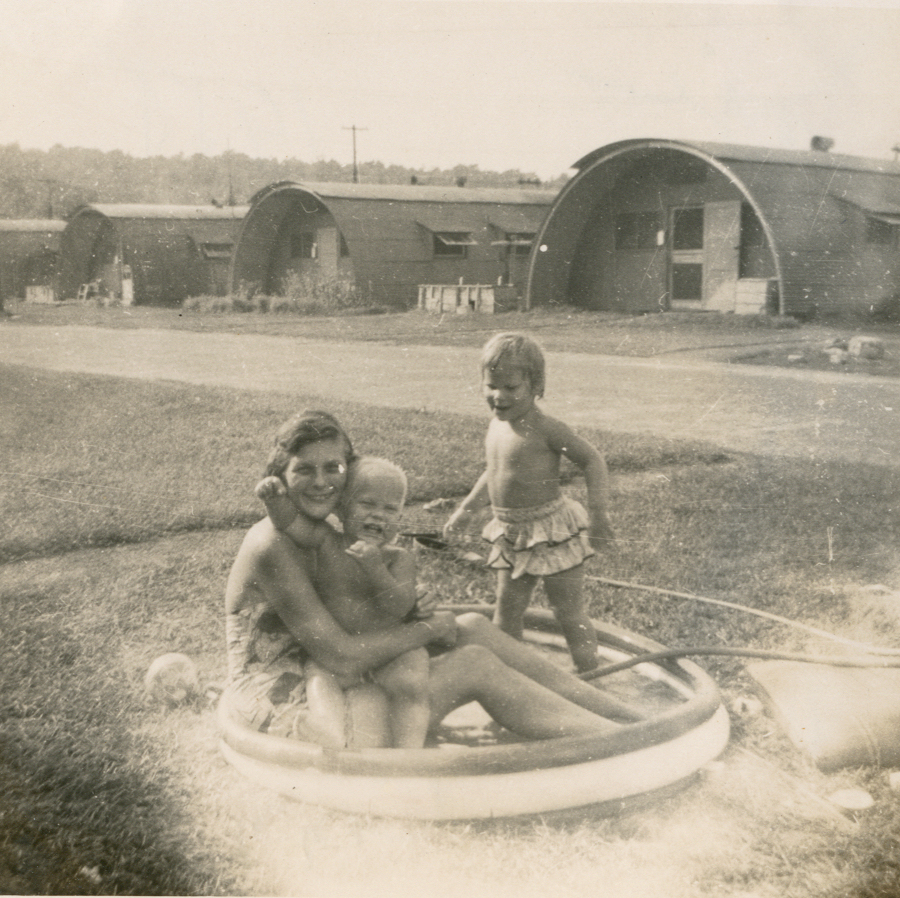
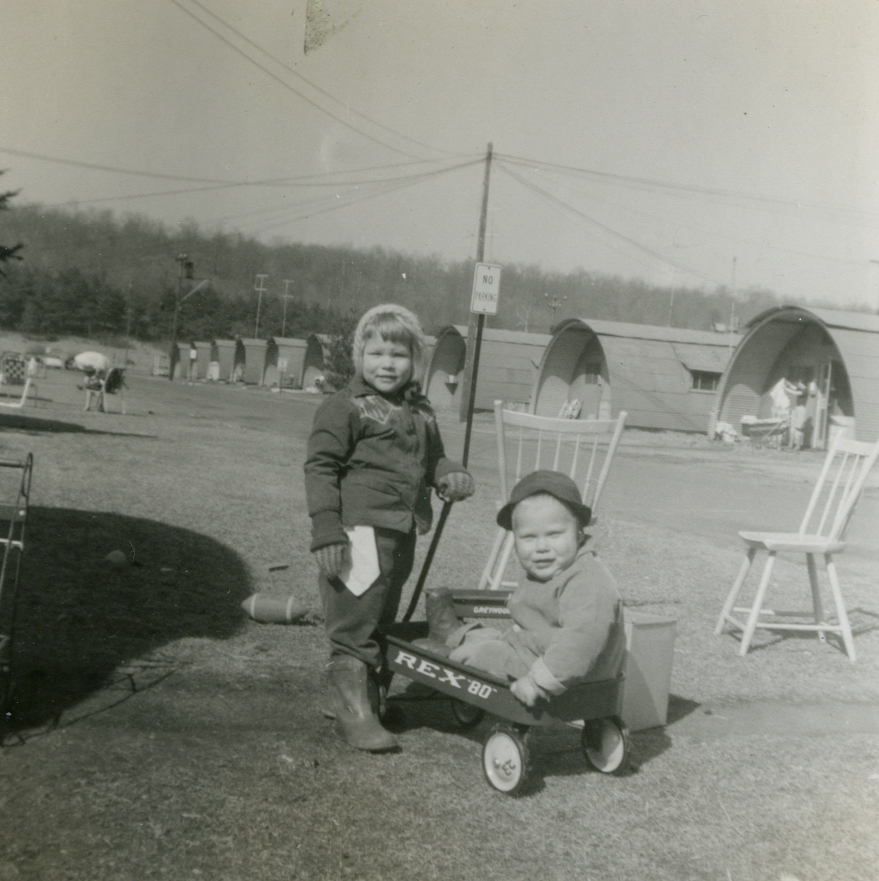
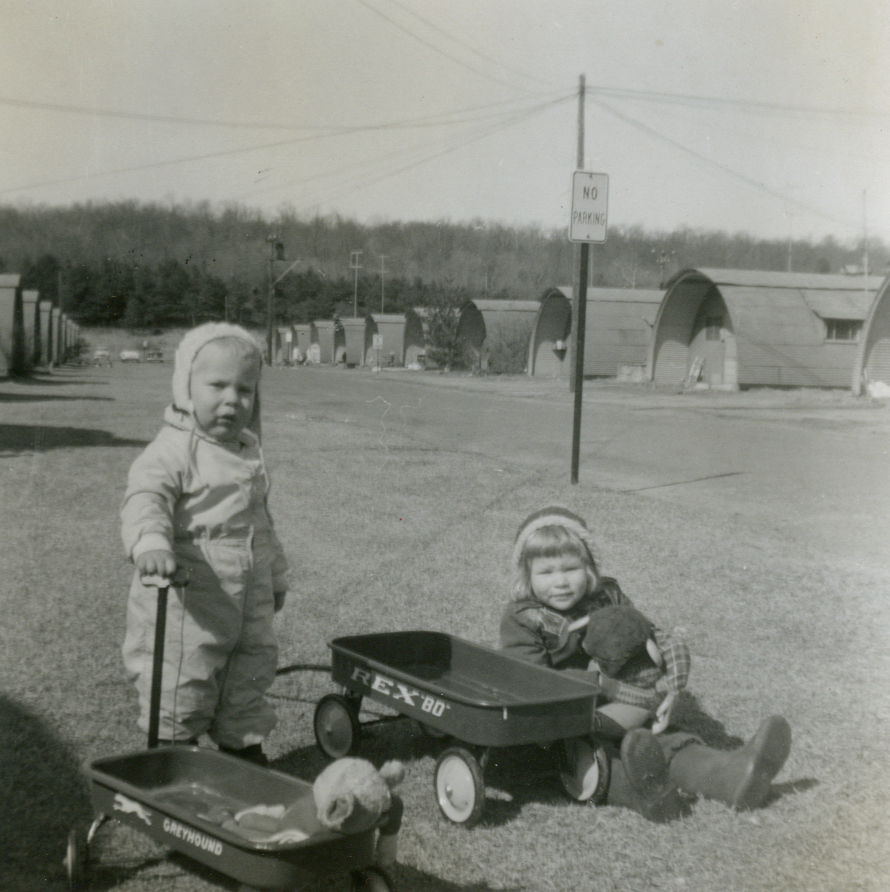
Karen and I were born at the Jacksonville Naval air station while dad was still in the Navy. A few months after he got out and I was born in 1955 we moved back to Connecticut where dad went to Yale forestry school. During those 2 years we lived in a Quonset Hut.

Joyce, Karen and Bruce enjoying a swim in front of the quonset huts

Yale after the World War II by Judith Schiff
During World War II, Yale was a de facto military training base. In early 1943, an Air Force training center opened on campus; 3,000 cadets took over half the residential halls. More programs followed. By war’s end, 20,000 cadets had been trained at Yale (see “When Yale Schooled for War,” December 2002).

As a result, the university had to begin planning for its return to normalcy long before the war ended. “Reconversion” was the term, and it embraced many things. The rare books and manuscripts that had been moved to bomb shelters and the priceless paintings that had been sent away from the East Coast were returned. A program called Yale Studies for Returning Service Men went into operation, with veterans permitted to graduate in six or seven terms.

Coping with reconversion was nearly overwhelming. The 900 men who had left in their freshman years were entitled to return, as were the 1,500 who had been admitted but never entered. Younger secondary-school men were entering the college as well, and women the graduate and professional schools. By September 1946 nearly 9,000 had matriculated—dwarfing the prewar student total of 5,000. Occupancy in the residential colleges was doubled; 200 were given rooms in homes of faculty and local alumni; some were assigned to Ray Tompkins House and to an old hospital in West Haven; and about 300 slept on cots in the gym until a used set of Navy barracks was put up on Science Hill. As for the dining halls, the printed menus, linens, and waitress service of the old days—all of which had been put on hold “for the duration”—were gone for good.

Karen and Bruce Barker

Then there were the married undergraduates and their families. Some were accommodated in “Quonset huts”—small residences with curved roofs and walls of corrugated metal, like tin cans sliced top to bottom and laid horizontally. A hundred were put up near the Peabody and the Yale Bowl. Other families occupied fraternity houses and Hillhouse Avenue mansions. George H. W. Bush ’48, with his wife Barbara and baby son George W. ’68, lived at 37 Hillhouse, next door to Yale president Charles Seymour ’08. The elder Bush later reminisced: “There were a dozen other veterans’ families sharing the house with us—each with one child, except for Bill and Sally Reeder, who had twins. That made 40 in all.”

Berkeley College master Samuel Hemingway ’04, ’08PhD, wrote in his 1945–46 report: “Never has the College seen a more well-behaved, hard-working, serious-minded group of students than our Veterans have proved to be; and their example has had a very salutary effect on the little boys.” As he noted, the oldest veteran was 30, the youngest freshman 16.

Bruce and Karen at the Quonset Huts

The 1946 commencement was a four-day celebration bringing back suspended traditions, such as honorary degrees, a Yale-Harvard baseball game, and an alumni parade to Yale Field for the game. (Yale defeated Harvard, 6–3. The lineup included the future ’48 captain, “Poppy” Bush.) On Sunday the university chaplain, Reverend Sidney Lovett ’13, gave a sermon in Woolsey Hall in commemoration of the 495 Yale men known to have lost their lives in the war; the total was later found to be 514.

The 1947 Yale Banner summed up the new era with relief and hopefulness: “This year, for the first time since 1940, Yale can look back on a year, if not of normality, at least of recovery; recovery of delayed ambitions, postponed goals, cherished traditions.”

Posted in Barkers, Historical | Leave a comment

Ralph Federick Barker

My Granduncle
Ralph Federick was the son of Ralph and Eugenia Barker my Great grandfather he was born in 1894. In 1882, Ralph and Eugenia moved from Connecticut to Florida to take a position as secretary and treasurer with the Madison Cotton Ginning Company, which owns the Phoenix Mills.
1910 Census has Ralph living at 143 Coleman Street with his mother and father.
1916 Ralph (22) filled out a WWI draft card – he was tall, slender, blue eyes, brown hair and not bald – (see Ancestry)
1917 Connecticut Military Census – Age 24, height 5′ 7″ weight 107. Do you have a serious disability: Yes . If so name it: Invalid.
1920 Census has Ralph (25) living on Coleman Street with his mother and father.
1924 his mother Eugenia died.
1928 his father died.
1930 Census has Ralph (36) living with Hubert and Eugenia Morfey and his occupation as machinist.
1938 – 1939 Ralph enters Battleboro Retreat.
F. died in 1943 when my dad was 14 years old. Dad doesn’t remember
The middle name Frederick must have come from Eugenia Frear Robinson, Ralph’s mother’s father who was Frederick E. Robinson.

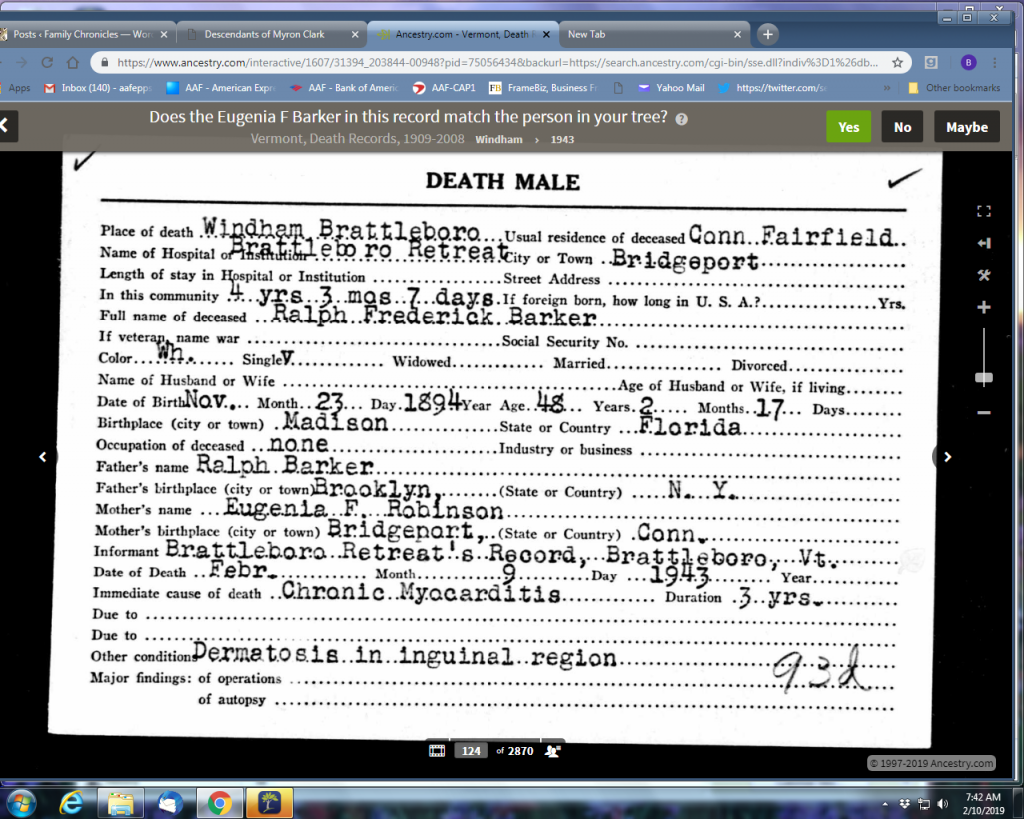
Ralph Federick Barker Death Certificate


Many different environmental agents can trigger myocarditis including viral or bacterial infections, toxins, and drugs. The reasons why some persons recover and others do not is an area of active investigation.

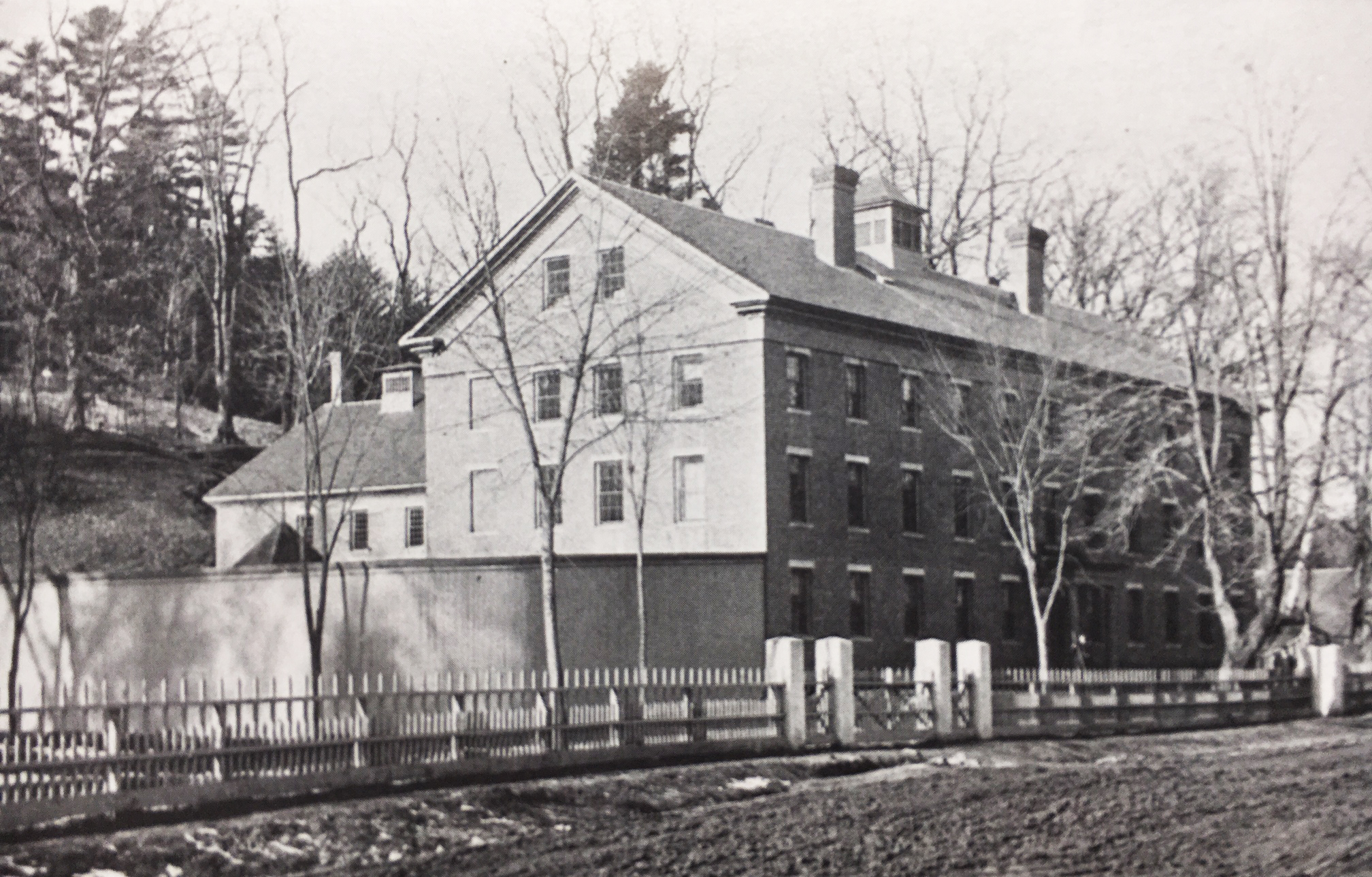
The Brattleboro Retreat was founded in 1834 as the Vermont Asylum for the Insane through a $10,000 bequest left by Anna Hunt Marsh for the establishment of a psychiatric hospital that would exist independently and in perpetuity for the welfare of the mentally disordered. The institution was renamed as the Brattleboro Retreat in the late 19th century in order to eliminate confusion with the state-run Vermont State Asylum for the Insane.

Battleboro Retreat

Taking its inspiration from the York Retreat in England, the retreat originated as a humane alternative to the otherwise demeaning and sometimes dangerous treatment of people with mental disorders. The focus on “moral treatment”, an idea derived from a Quaker concept, introduced by William Tuke in the late 18th century,  which approaches mental disorders as diseases and not as character flaws or the results of sins. This remains the institution’s guiding philosophy.

For much of the 19th and 20th century, treatment methods emphasized fresh air, physical activity, educational enrichment, therapeutic farm and kitchen work, and supportive staff. Some of the techniques used at the retreat were influenced by the Quakers and Benjamin Rush, a physician and American Revolutionary War supporter.

Battleboro Retreat – Vermont

The Brattleboro Retreat has been known throughout its history for adhering to the concepts of moral treatment while integrating advanced methods of care. The administration established the following “firsts” among psychiatric hospitals in the U.S.: patient-produced newspaper, bowling alley, chapel, theater, gymnasium, recreation fields, patient chorus, book discussion groups, outing club, working hospital dairy farm, patient-managed enterprises, and the first swimming pool at a U.S. psychiatric hospital.

Patients enjoyed frequent outings and the community would often join the patients for events. The facility has some secure units but is not separated from the community by fencing. Many aspects of the Brattleboro Retreat’s medical care and physical design have been adopted by hospitals around the world.

The retreat cautiously approached modern treatment modalities such as electroconvulsive therapy (“ECT”) and utilized them in a fairly limited capacity. Today the retreat’s ECT clinic is closed. Most patients have enjoyed a greater degree of freedom than at other institutions, with windowed bedrooms instead of cells or cages. Due to rapid construction, patients had large private rooms even as overcrowding became an issue at other hospitals, leading many historians to conclude that the Brattleboro Retreat is among few long-established psychiatric hospitals with an unblemished history. This dignity ended for many patients when state hospitals began to be built. Many long-term patients feared leaving their beloved home and tried to avoid transfer to state facilities. Unfortunately, some were relocated to new state hospitals against their wishes. This decrease in patient census was compounded by the loss of patients due to the development of mood stabilizing drugs. The hospital has used this open capacity for new programs such as specialty schools and outpatient resources. Recent innovative programs include a new inpatient unit for LGBT individuals, and a partial hospital/residential program for uniformed service professionals (corrections, fire, first responders, military, and police).

The hospital lacks the historical stigma associated with some psychiatric institutions due to its consistent focus on patients’ individuality and fair treatment. A full staff of doctors, psychologists, psychiatric nurses, social workers, and other medical personnel continue this tradition of patient care.[

Book I found detailing the care people received from their time at the retreat

Posted in Barkers | Leave a comment

Joyce Adele Edwards

Weighing in at 9 lbs – 1 oz Joyce was born on Wednesday, March 20, 1929 at 3AM to Bessie O. and Louis R. Edwards. Joyce had two brothers to greet her into this world; Louis Renoud Jr. (age 5) and Gordon Sherman (age 4). The two boys were so hoping for another brother they decided to call Joyce ‘Pete’ a nickname they kept all through life.

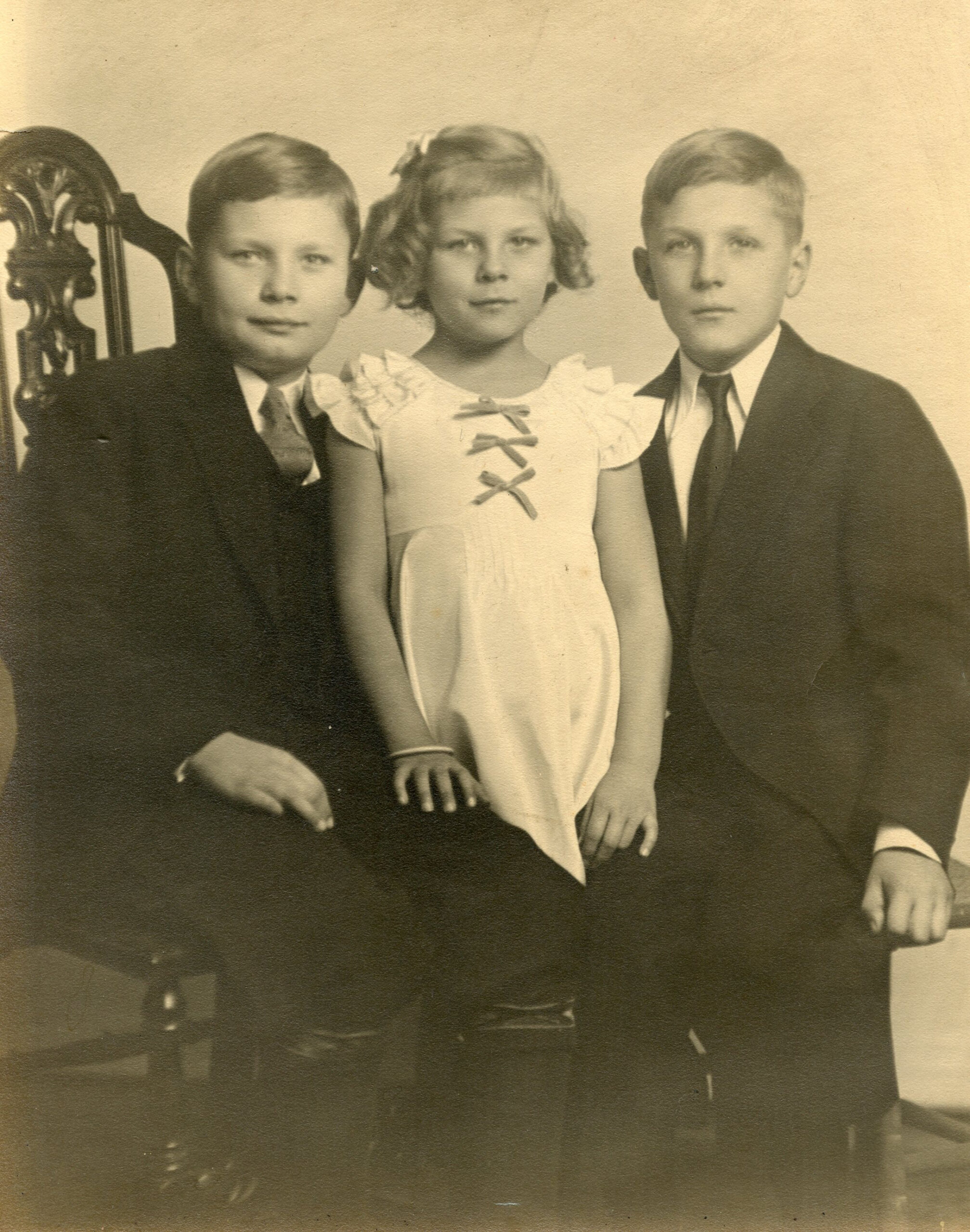
Joyce Edwards with her brothers Junior and Gordon.

On August 25, 1930 Bess writes about her hair. ” First hair trim. Didn’t want to have her hair cut but, every barrette, ribbon or pin I put on her she takes off so she looks dreadful with hair in her eyes all the time. Took her down to Hovolands while Gordon got his hair cut and had it just trimmed in the front. Didn’t have the sides or back touched as it just “seems” to curl up a bit – looks so cute with a bonnet on. Joyce cried when father put her in the chair and wouldn’t have the apron on her at all. First time she has been downtown – would look in all of the show windows. Think most everybody stopped to look and talk to her fat legs and arms just make people notice her and say how cute she is.”

Bessie and Louis lived at 588 Toilsome Hill Rd in Fairfield and also had a small house at the beach, I believe near Milford. At one trip to the beach when Joyce was 5 months old Bess writes in Joyce’s baby book. ” Laying on Jr’s and Gordon’s bed at the beach when they came in from swimming. They were drying themselves – Jr said to Gordon let me dry you back and started rubbing him quite hard. Joyce just looked at them and started in laughing as hard as could be. A little later Jr. said it again and again she laughed so hard just as though she knew what is was about.”

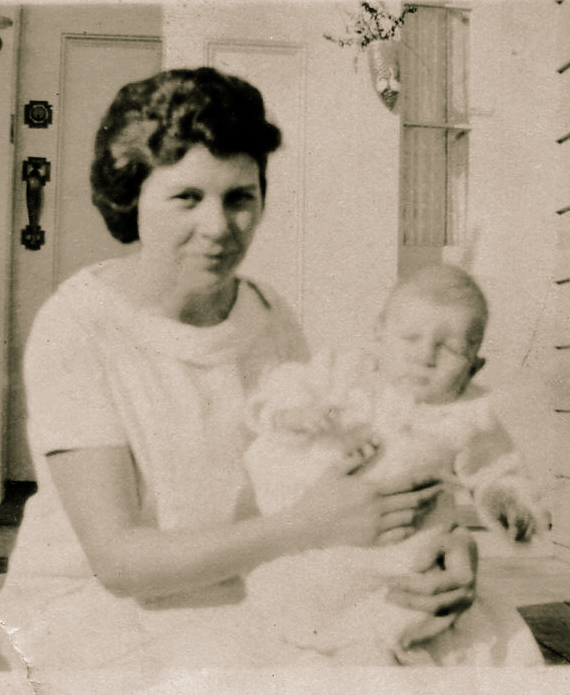
Bess and Joyce Edwards
Bess and Joyce Edwards – 1929
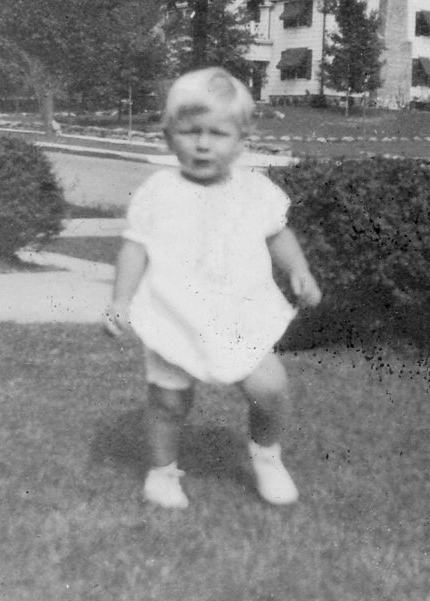
Joyce Edwards
Joyce Edwards
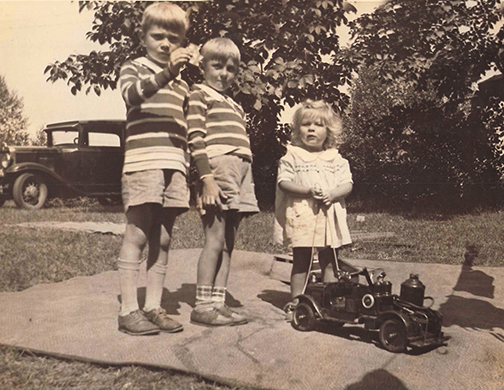
Joyce often preferred the iron toys of her brothers to dolls – this picture shows Jr., Gordon and Joyce.
Joyce stopping on the way to the beach for a photo with mother and brother

Our Blessed Baby crept for the first time.
At 5 month old left Joyce on a blanket in front of our porch door in living room and a few minutes later when I came in she was in front of the fire place about 12 feet – thinking she rolled on her stomach and then back on her back until she got there.
At 10 months in her kiddy car but goes backwards instead of forward. Can creep all over, but don’t want her to as the boys leave everything on the floor and I am afraid she pick up something and get it in her mouth, 17 months old (walking) Aug 1930 – she walked across the kitchen floor. Gordon and Jr. got a great kick out of seeing her walk. Can’t stop her now.
Favorite Toys
9 months old Christmas 1929 – small box of blocks – she loves to take them out and put them back again.
1 year and 4 months – would rather have the boys iron toys than any doll.
6 years – her bicycle and doll that really drinks water and has to be changed.
First Christmas
December 25, 1929, 9 months old. Mother and Junior and bed with scarlet fever. Daddy had to take care of the tree and all the gifts.
First Birthday
March 20, 1930 – Junior and Gordon wanted her to have an cake with a candle on it – so we did – guess they got more fun out of it than Joyce did – but next year when she is two she will no more with what it is about. Aunt Edith gave her some colored beads to play with, Aunt Glady and aunt minnie(?) some money. Boys gave er rattles and rag doll.


Mother’s Notes
Jan 1930 Jr. Mother and Gordon all had scarlet fever – Dr. E.B Waldon thinks Joyce had a slight case of it. She had a rash, ran a temperature every night,, had a red throat just a day and tip of her tongue scarlet just for a day or two – wouldn’t finish any of her bottles.
February 1931 Whooping cough caught from Jr. – Poor little girl was so sick. Had it more severe than the boys. We turned the radio off, just listened for the first whoop to run up to her bed. Lost every meal for 2 weeks serving(?) did seem to help. Poor child hasn’t a chance of escaping a thing with her brothers bringing home everything.
1933 – Measles
1934 – Chicken Pox – left 2 small pox over top lip.
Baptized April 4, 1931 – Easter Eve at 4PM – wore a darling tea rose crepe dress smocked in blue and pink puffed sleeves edges in cream and lace which auntie Mae gave her for her birthday. White shoes socks and pink hair ribbon. Coral flannel coat flannel poked hat to match with scalloped brim. Her picture was taken in this dress when 3 years old.
—– End Baby Book

Growing up with 2 big brothers as rambunctious as Junior and Gordon, Joyce had no choice but to get tough. Once while trying to keep up with brothers snow sledding she hit a tree and broke both arms. Martha, Joyce’s brother Gordon’s wife, writes “Gordon loved he so much he named a son after her, ‘Pete’ and didn’t get mad at her when she drove his car into a brook.”

Joyce attended public schools up to high school then transferred to Cushing Academy a college preparatory school located in Ashburnham Massachusetts. The school was charted in 1865 and was coeducational since the beginning. After graduating Joyce went to Beaver College to study early childhood education. Beaver College was founded in 1853 as Beaver Women’s Seminary located in Beaver Pennsylvania. By 1872 it had attended collegiate status, under the auspices of the Methodist Episcopal Church and was named Beaver College.

Joyce, second row on the right, with college friends.

In response to 2012 reunion of the class of 1952 questionnaire Joyce answers the follow questions.
Personal: What have you been up to since graduation? First job was teaching first grade in Connecticut. Married and moved first to Pensacola and then Jacksonville, Florida, where I taught 4 and 5 year old classes and ended up director. After 28 years and 4 children, we moved to northern Virginia fir a 5-year stint then moved to Athens Georgia, where we remain today.
Family? Married George R.(Bob) Barker, April 25, 1953. We have 4 children: Karen (labor and delivery nurse in Atlanta), Bruce (owner of Athens Art and Frame with 3 shops in Athens), Diane (teacher of exceptional children in Tribune Kansas), and George (consulting forester in Tallassee Alabama). From these 4 and their spouses we have 17 grandchildren and two great grandchildren,
What is your most vivid memory of your college years? One of the most vivid event memories of my college years was the 1 competition of the annual Song contest, but more lasting were the people: having the same roommates for all four years, living in Grey Towers and waiting for the bus to take us to the other side, and meeting so many girls from different parts of the country was great and a valuable learning experience. Quite frankly, there are sooo many memories, it’s hard to mention them all.

Joyce Adele Edwards
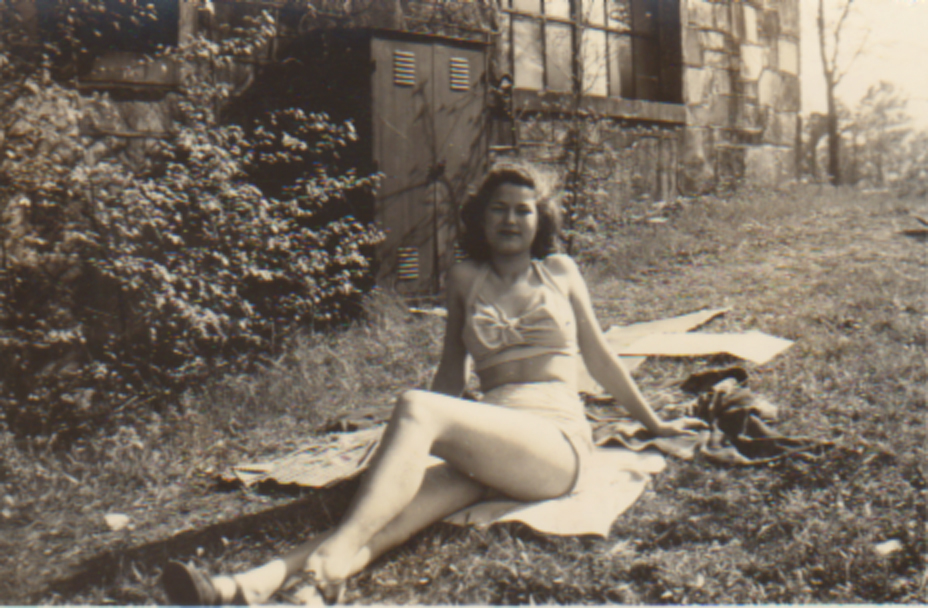
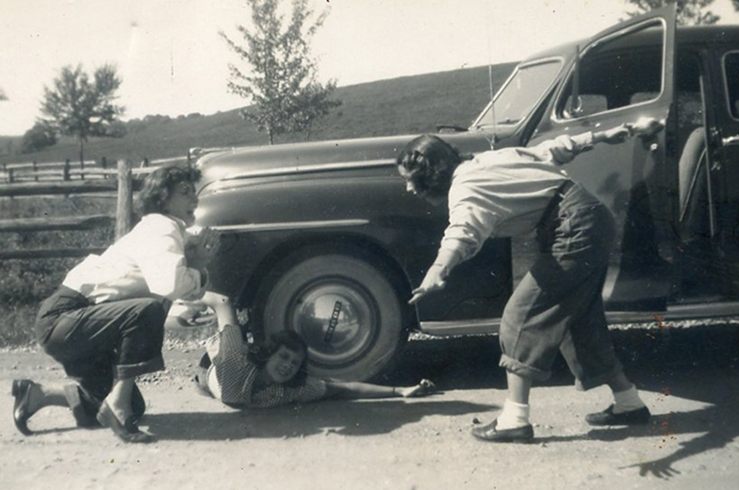
Joyce staging a photo op of being run over with college friends.
Joyce with her mother Bess
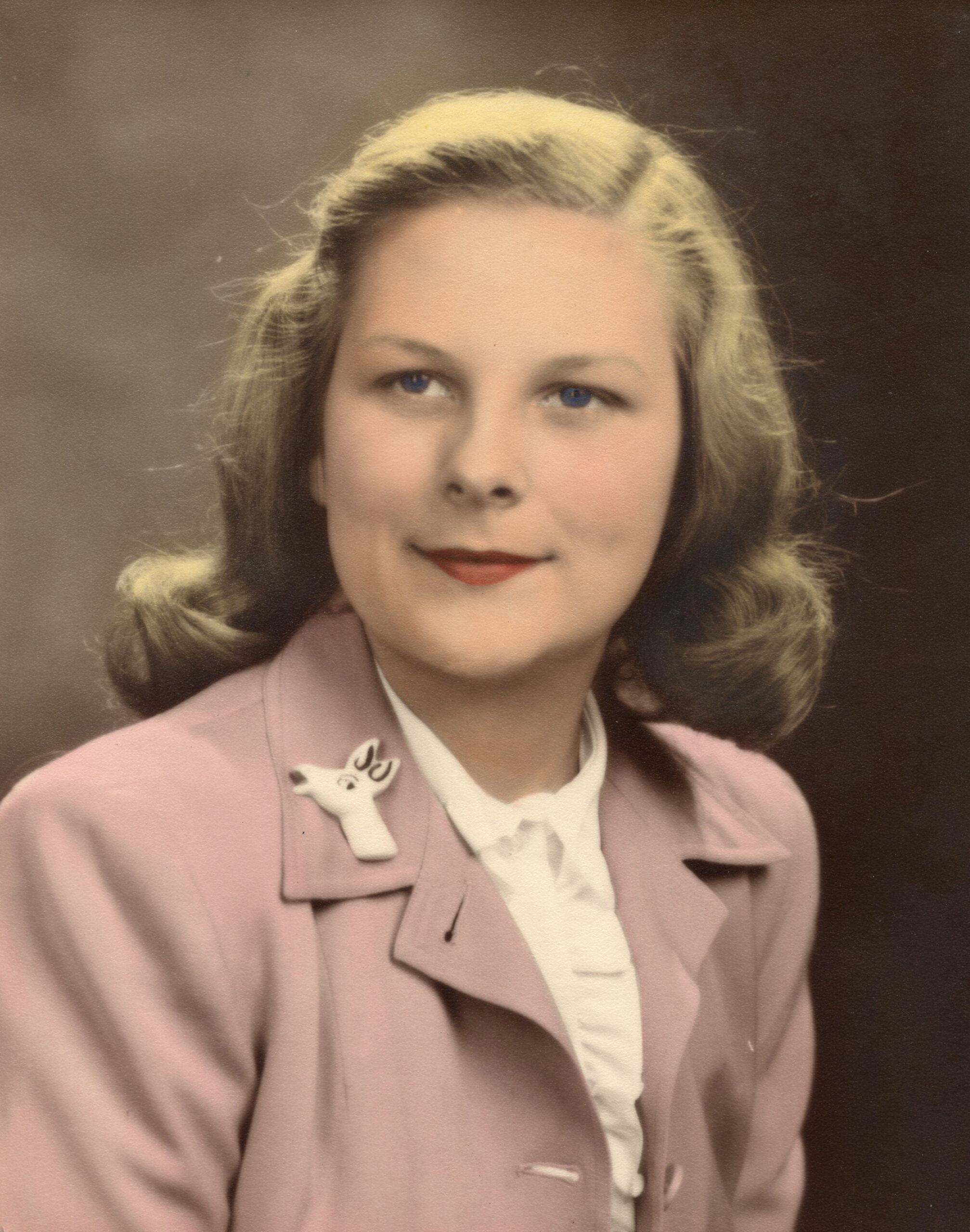
Joyce’s senior portrait –
Posted in Barkers, Edwards | Leave a comment

Acheson O’Brien

Relationship: Maternal Great Grandfather
Born: August 1851, Ireland (Source: 1900 U.S. Federal Census)
Died: 14 November 1905 (see probate note below; some records suggest 20 November 1905)

Acheson O' Brien
Acheson O’ Brien

Early Family Background

Acheson O’Brien was born in Ireland in August 1851, likely in or near County Fermanagh based on family connections and surviving church records. His parents were:

  • Robert O’Brien
  • Margaret Dundas

Robert O’Brien and Margaret Dundas were married on 2 November 1841 at Inishmacsaint Church of Ireland, County Fermanagh.
(Source: Fermanagh Parish Registers – Marriages)

The Dundas surname is of Scottish origin and derives from lands near Edinburgh in West Lothian, Scotland. The name comes from the Gaelic elements:

  • dun — hill or fortress
  • deas — south or southern

The Dundas family became historically prominent in Scotland, eventually holding titles including Viscount Melville and Marquess of Zetland. While no direct aristocratic connection has been established for Margaret Dundas, the surname itself reflects a Scottish ancestral background common in Ulster Protestant communities.


Possible Earlier Family Connections

A historical directory entry lists an Acheson O’Brien living in:

  • Leitrim, Killeshandra, Ireland (1855)
    (Source: Thom’s Irish Almanac and Official Directory with Post Office Dublin City and County Directory)

Because this entry predates the birth of the younger Acheson O’Brien, it may refer to an earlier relative — possibly his grandfather or another close family member. The use of “Acheson” as a given name suggests it may have been a recurring family name passed through generations.

Another potentially related record appears in the British Merchant Seamen archives:

  • Robert O’Brien
  • Born: 19 May 1832
  • Place: Enniskillen, County Fermanagh
  • Listed in: Britain, Merchant Seamen, 1835–1857

It is not yet confirmed whether this is Acheson’s father or another relative, but the location and surname make the connection plausible.


Education and Family Tradition

Family tradition holds that Acheson O’Brien was studying law in Ireland before immigrating to America. According to oral history, he fell in love with a Catholic woman and was subsequently disowned or expelled from the family by his father due to religious differences — a serious matter in 19th-century Ulster society, where Protestant-Catholic tensions remained strong.

The couple reportedly emigrated to the United States together.

While no school records have yet been found, possible institutions where Acheson may have studied law include:

  • Queen’s University Belfast
  • Ulster University (or an earlier predecessor institution, as the modern university did not yet exist in its current form)

This story remains unverified but is consistent with the social and religious realities of Ireland during that era.


Immigration to America

According to the 1900 U.S. Federal Census, Acheson immigrated to the United States in 1881.

Evidence suggests he initially settled in Illinois, because his son was reportedly born there in 1882. Family history states that Acheson’s first wife died during childbirth shortly after their son’s birth. After her death, Acheson appears to have relocated to Connecticut.


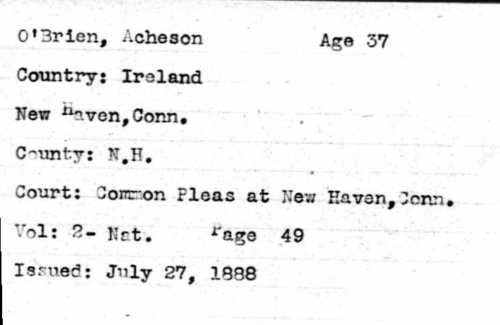
Naturalization

Acheson became a naturalized U.S. citizen in:

  • New Haven, Connecticut
  • 27 July 1888
  • Age: 37
  • Birthplace: Ireland

This naturalization record helps confirm both his immigration timeline and residence in Connecticut by the late 1880s.


First Marriage

First Wife: Unknown (“Wiss??” or similar spelling uncertain)

Very little is currently known about Acheson’s first wife. Family records suggest she died in childbirth in 1882.

Child from First Marriage

  • Robert Wiss O’Brien

The middle name “Wiss” may preserve the mother’s maiden name, although the exact spelling remains uncertain.


Second Marriage

Acheson later married:

Julia Anna Bloss Gier (also spelled Geer)

  • Born: 1863, Germany
  • Died: 8 September 1927

Marriage

  • 11 March 1891
  • Manhattan, New York
    (Source: New York, New York Extracted Marriage Index, 1866–1937)

Julia had previously been married and brought a daughter into the marriage:

Stepdaughter

  • Trena Gier (Geer)

It is possible Julia named her daughter after a younger sister named Trena, who appears in the 1880 U.S. Census at age 12.

Child from Second Marriage

  • Augusta Bessie O’Brien

Life in Connecticut

By 1900, Acheson was living in New Haven, Connecticut, where he worked as a:

  • Motorman
    (Source: 1900 U.S. Federal Census)

A motorman typically operated electric streetcars or trolleys, an important and skilled urban transportation job during the rapid industrial growth of American cities at the turn of the century.


Death and Probate

Records from the:

Calendars of Wills and Administrations, 1858–1922

(National Archives of Ireland)

state that Acheson O’Brien:

  • Lived on Grand Avenue, New Haven, Connecticut
  • Worked as a motorman
  • Died in November 1905
  • Left an estate valued at approximately 10 pounds

Administration of the estate was granted in Dublin to:

  • Robert O’Brien

The probate calendar lists the death date as 20 November 1905, while other family records give 14 November 1905. This discrepancy may reflect the difference between the actual date of death and the date probate proceedings were recorded.


The O’Brien Surname

The surname O’Brien derives from the Irish:

  • Ó Briain — meaning “descendant of Brian”

The name is associated with the famed High King of Ireland:

Brian Boru

who died in 1014 after the Battle of Clontarf. The surname traditionally conveys meanings associated with nobility, eminence, or high status and remains one of the most common surnames in Ireland today.

(Source: IrishRoots and traditional surname histories)

Posted in Edwards | Leave a comment